
An anniversary dinner at home is one of the few occasions where the food, the setting and the memory are meant to be one thing. Unlike a restaurant reservation, a dinner at home lets you shape the evening entirely — the menu can reference the meal you shared on a first date, the table can be set the way you like it, and the evening can end when it feels complete rather than when the table turns. Planning it well is what turns a nice idea into a night you remember. This guide walks through how to plan an anniversary dinner at home, from the first conversation with the chef to the last pour, so the evening feels like yours.
It is written for hosts planning anniversaries in homes across Texas and Florida, and reflects how Ambrosía approaches the occasion: every menu written from scratch, every detail confirmed with you before the date, and availability confirmed individually for each evening. The plan below is what makes the dinner personal rather than generic — the difference between a meal that happens to be at home and one that could not have been anywhere else.
Start with what the anniversary means
The first planning conversation is not about the menu; it is about the occasion. Which anniversary is it — the first, the tenth, the fiftieth? Is it a quiet evening for two, or a gathering of close family and friends? Is there a dish with history — the meal from your first date, a cake from the wedding, a recipe from a grandmother? The meaning shapes the menu, and a chef who asks these questions is designing the evening rather than filling a table. Share what the anniversary means to you before you share the guest count.
That meaning becomes the foundation of a personalized menu. If the first anniversary was a pasta dinner in a small apartment, the chef can build a course that references it without copying it. If the wedding featured a particular flavor — a citrus, a spice, a dessert — the menu can echo it in a way that is subtle enough to be felt rather than announced. These references are what make an anniversary dinner feel designed for the occasion rather than simply served at it.
For a milestone anniversary with guests, the meaning expands. The dinner can become a retrospective — a course from each decade, a toast that names the years, a table set with details that reference the shared history. The chef and the host plan this together, so the menu tells a story the guests can follow, and the evening feels like a celebration of a life rather than a dinner that happens to be on a significant date.
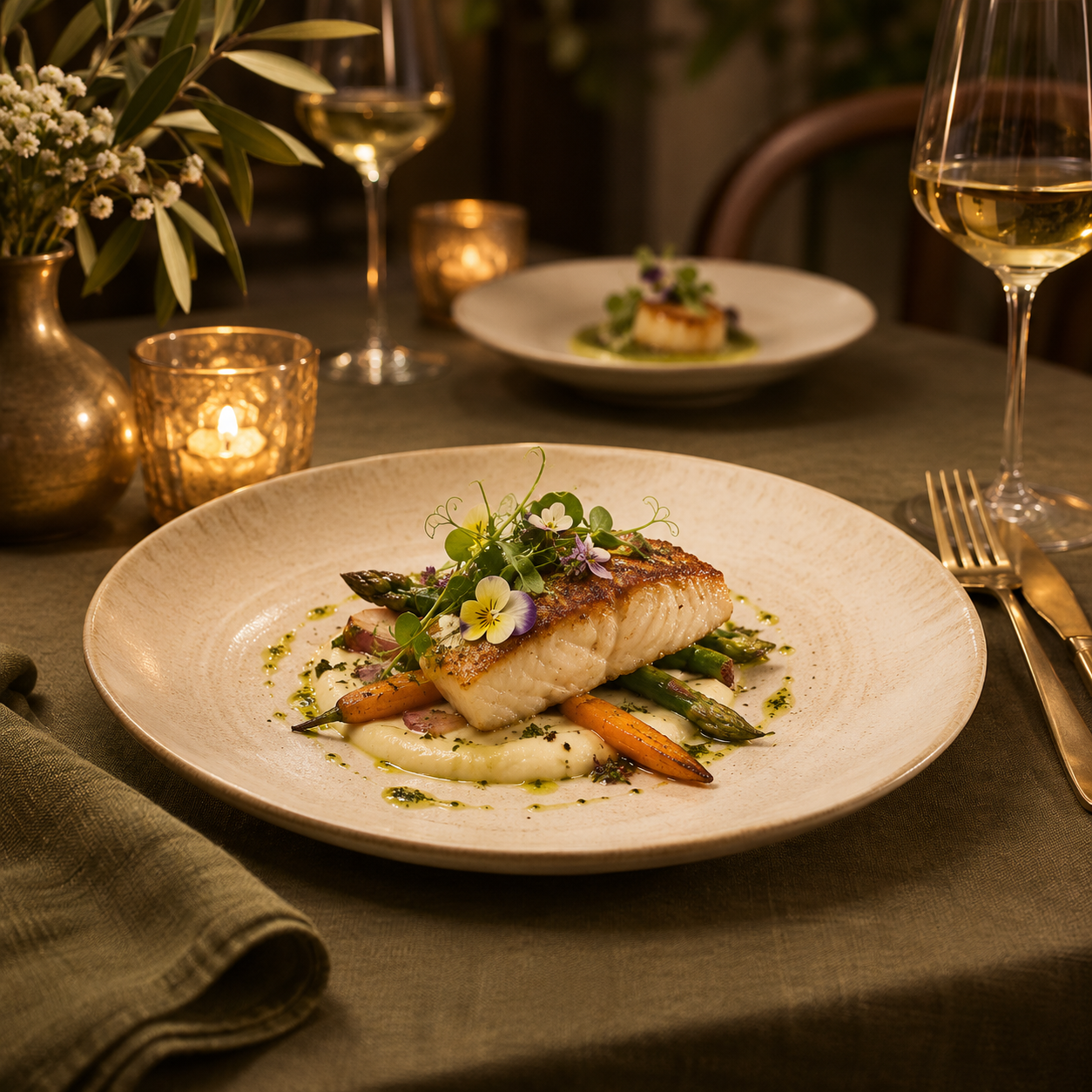
Designing the menu around the two of you
Once the meaning is clear, the menu follows. A private anniversary dinner is the occasion where a from-scratch kitchen earns its fullest value, because the menu can be built entirely around your tastes, your history and your table. The chef asks what you love — a cuisine, a season, a technique, a dish — and what you avoid, and the menu is written to include the first and design around the second. A couple who loves seafood and dislikes overly sweet desserts gets a menu that reflects both, not a generic tasting that ignores either.
The format suits the evening. An intimate anniversary for two often wants a tasting menu — a progression of small, beautiful courses that gives the evening a shape and turns the dinner into an experience rather than a meal. A larger anniversary gathering may want a generous three-course dinner that lets the table talk. The format is chosen for the evening, not for its own sake, and the chef explains how each one would run in your specific home.
Dietary needs are handled personally, because at a table of two or six, the chef knows each guest by name. An allergy gets a separation protocol; a preference gets a design choice; a medical restriction gets the full seriousness it deserves. At an anniversary dinner, the menu should feel like it was written for the people at the table, and a from-scratch kitchen is how that happens. Share the needs during the consultation, before the menu is finalized, so they are built in rather than worked around.
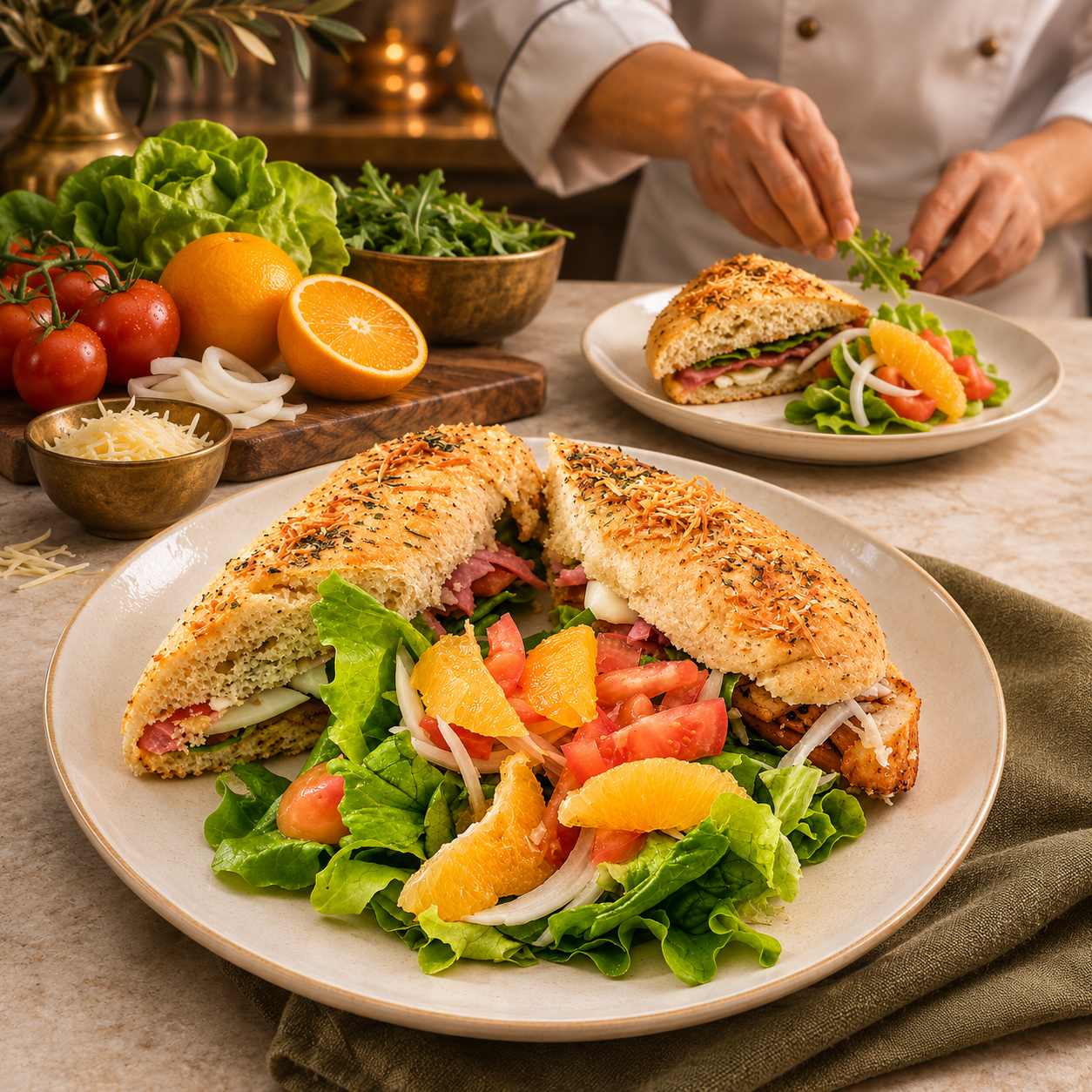
The setting: your home as the venue
The home is the venue, and the setting shapes the dinner as much as the menu. The chef asks about the kitchen — the oven, the cooktop, the counter space, the sink — because the menu is designed around what the kitchen can do. A home with a generous island and a good oven supports a different menu than one with a compact galley kitchen, and the chef plans accordingly. The consultation covers the equipment honestly, so the menu fits the kitchen rather than overpromising what the space can deliver.
The table is yours to set. The chef can advise on what the menu needs — a specific glass for a pairing, a bowl for a course — but the look of the table is your vision. Candles, flowers, linens, the playlist, the lighting — these are the elements that make the evening yours, and they are what separate a dinner at home from a dinner that happens to be catered. Plan the table the way you want the evening to feel, and the chef's food will sit on it naturally.
The flow from kitchen to table matters at an anniversary dinner, because the evening should feel smooth rather than interrupted. Confirm where the chef will work, where the courses will be plated, and how the path between the kitchen and the table will run. A clear path keeps the service invisible and the evening about you, not about the logistics. If the kitchen is far from the dining area, the chef may plate closer to the table or use a tray, and that detail is confirmed during the consultation so the night flows.
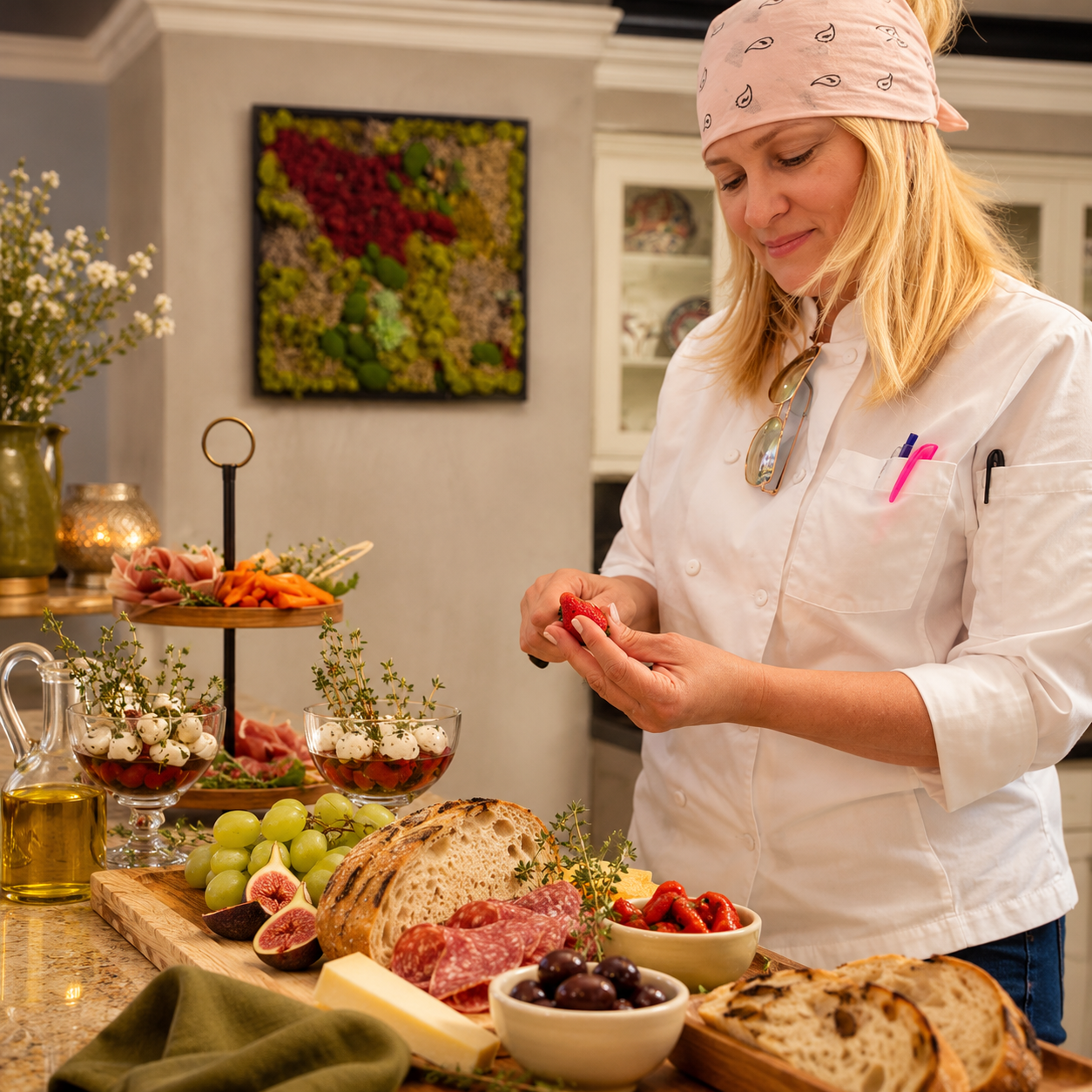
The timeline and the moments that matter
An anniversary dinner has a timeline, and it should be planned even if it is a quiet evening for two. When does the chef arrive, and how much kitchen time does the menu need? When do you want the first course, and how should the evening pace? If there is a toast, a gift, a moment of recognition — where does it fall in the sequence? The chef builds the timeline around your evening's fixed points, so the food supports the moments rather than competing with them.
A toast between courses is a planned pause, not an interruption. If you plan to raise a glass after the main course, the chef holds the dessert so the moment has its own space. If a gift follows dinner, the service clears and the room settles before the next step. These moments are what make an anniversary dinner feel like an occasion rather than a meal, and the timeline is designed so they land at the right time rather than awkwardly between plates.
The closing of the evening deserves its own care. A final pour — a digestif, a coffee, a last glass of something meaningful — extends the evening gently and gives it a natural end. A dinner that finishes with the plates cleared and a warm pour in hand feels complete; one where the service vanishes after the last course feels abrupt. Plan the closing as deliberately as the opening, and the anniversary dinner will feel like an evening that was designed rather than one that simply happened.
Confirming the details before the night
The day before, a short checklist closes the remaining details. Confirm the arrival time and the access with the chef. Clear the counters, the sink and the stovetop so the kitchen is ready. Set the table the way you want the evening to look, with the glassware and linens the menu needs. Confirm the final guest count and any dietary needs by name. Each item takes a few minutes, and together they are what makes the chef's arrival the start of cooking rather than the start of problem-solving.
On the evening, leave a little time before the chef arrives. An anniversary dinner is not the night to be still showering when the chef walks in; being ready means you can welcome the evening rather than work around it. You do not need to help the chef cook — that is the point of the service — but being present and available for the small questions keeps the night smooth. This is your anniversary, and the preparation above is what lets you sit at your own table as a guest.
Finally, plan to enjoy it. The meaning, the menu, the setting and the timeline are all designed so the evening belongs to you and the person you are celebrating. At Ambrosía, the consultation, the arrival note and the final check are all part of one confirmed plan, and every detail is agreed with you individually before the date. Your submission is an inquiry, and the plan above is what turns an anniversary at home into an evening you will both remember. Share your date and venue through the inquiry page or call (469) 268-9100 to begin.
Frequently asked questions
How far in advance should I plan an anniversary dinner at home?+
Three to four weeks is comfortable for most dates; milestone anniversaries during peak season benefit from more notice. Availability is confirmed individually for each date, so share yours as early as you have it.
Can the menu reference our history together?+
Yes — a dish from a first date, a flavor from the wedding, a family recipe can be referenced in a course. Share the meaning during the consultation so the chef can build it into the menu.
Do I need a large kitchen for an anniversary dinner?+
No. Most home kitchens are workable. The menu is designed around what your kitchen can do. The consultation covers the equipment and the plan fits the space.
Should it be a tasting menu or a three-course dinner?+
An intimate anniversary for two often suits a tasting menu; a larger gathering may prefer a three-course dinner. The format is chosen for your evening and confirmed with you before booking.
Can dietary needs be accommodated at an anniversary dinner?+
Yes — at a small table, the chef knows each guest by name. Allergies get separation protocols; preferences get design choices. Share needs during the consultation so they are built into the menu.
Can the chef accommodate a toast or a gift moment?+
Yes — flag any fixed moments during the consultation so the timeline bends around them. A toast between courses is a planned pause, not an interruption.
How do I start planning an anniversary dinner with Ambrosía?+
Share your date, guest count, venue and any dietary needs through the inquiry page or call (469) 268-9100. The menu is written from scratch and every detail is confirmed with you before the date.
Source notes
- ✦Anniversary dinner planning reflects standard in-home private chef practice; specific details always depend on the occasion, the kitchen and the table.
- ✦Dietary-handling guidance reflects general food-safety practice; allergies require separation protocols and should be shared before the menu is finalized.
- ✦All Ambrosía anniversary menus are written from scratch and every detail is confirmed with the host before the date.