
Choosing a cooking class for your skill level is the single decision that most shapes whether the evening feels rewarding or frustrating. A class built for confident home cooks moves at a pace that can leave a beginner behind, while a beginner class that spends forty minutes on knife grips can bore an experienced cook. The right match is not about finding the most advanced class you can book; it is about finding the class where you are slightly outside your comfort zone and still able to keep up. This guide explains how to choose a cooking class for your skill level, what to ask the chef before you book, and how to read your own experience honestly so the class you choose is the class you enjoy.
Ambrosía offers cooking classes twice a week; actual dates, format and location are confirmed with you at the time of booking. The guidance below reflects how a chef-led class is matched to a table, and it is written for cooks across Texas and Florida who want to spend an evening learning rather than watching.
Read your own experience honestly
The first step is an honest accounting of where you actually cook. 'I cook at home' is not a skill level — it is a description of where your stove happens to be. The question that matters is what you cook, how often, and what happens when a recipe goes wrong. A person who cooks dinner five nights a week from a rotating repertoire has a different foundation than someone who cooks twice a month from a kit. Neither is lesser, but they need different classes, and the chef cannot match the class to you if you describe yourself in vague terms.
Think in concrete examples. Can you dice an onion without thinking about it? Have you made a sauce from scratch — a pan sauce, a béchamel, a vinaigrette — or do you open a jar? Have you cooked proteins to temperature by feel, or do you cut into a chicken breast to check? Have you worked with yeast dough, or is baking a mystery? These answers form a picture of your actual level, and a good chef will ask them during the inquiry because they determine which class format fits.
Be honest about your gaps, too. Many confident cooks have never made pasta from scratch, or have never broken down a whole fish, or have never worked with a pressure cooker. A class that targets one of those gaps is valuable precisely because it fills a specific hole rather than rehearsing what you already know. The most useful class is often the one that teaches the thing you have been avoiding, and naming that thing during the inquiry is what lets the chef build the right session.
The three skill tiers and what each needs
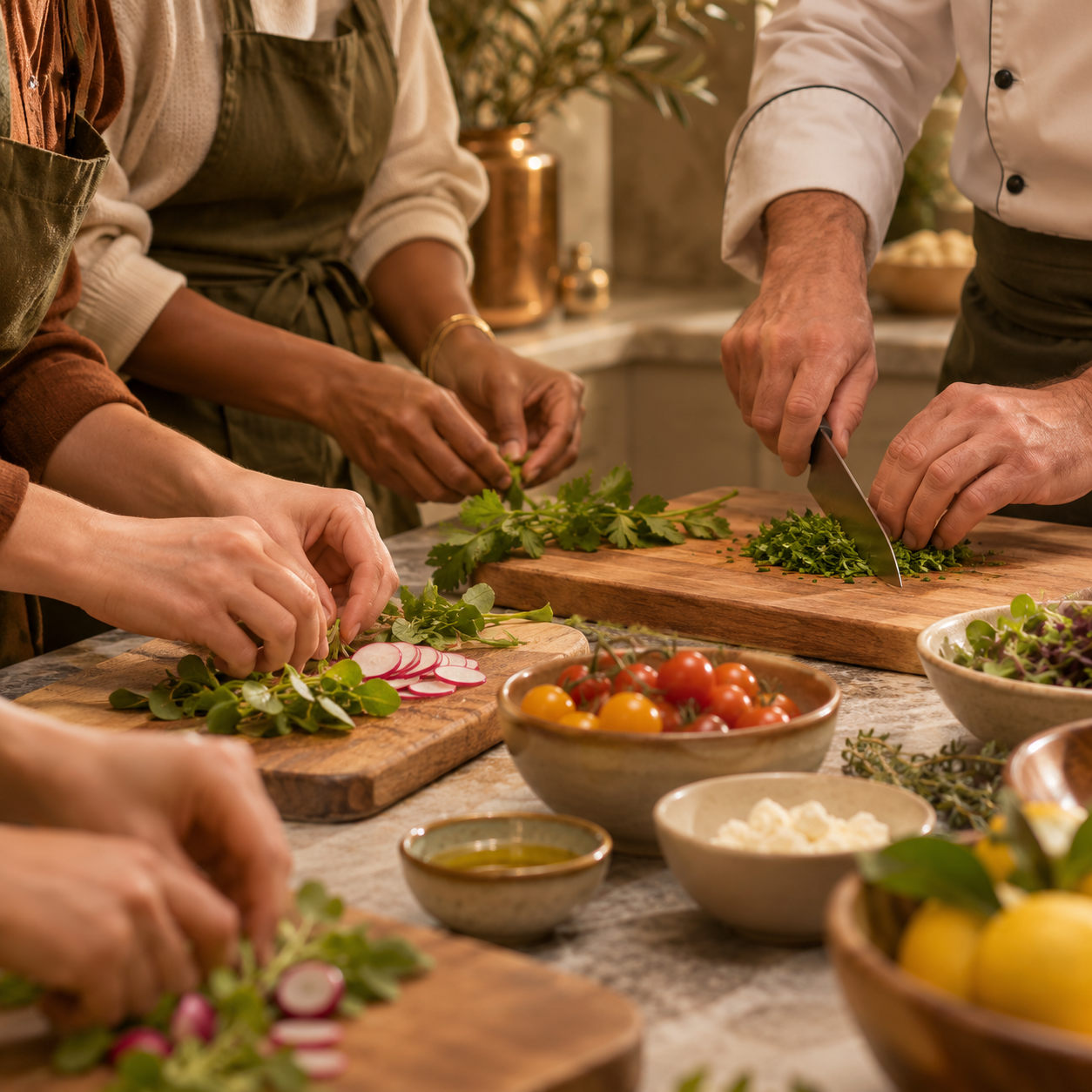
Cooking classes generally sort into three tiers, and understanding them helps you name where you sit. A beginner is someone who is comfortable in the kitchen but has never built technique from the ground up — they follow recipes, they get decent results, but they cannot explain why a sauce broke or why a piece of meat dried out. A beginner class teaches the fundamentals: knife work, heat control, the logic of seasoning, and a few foundational techniques that make everything after them easier. The pace is patient, the chef circulates constantly, and the goal is confidence, not a long menu.
An intermediate cook has a repertoire and some technique, but hits a ceiling — their sauces are inconsistent, their timing is reactive rather than planned, or they avoid entire categories like pastry or braising. An intermediate class targets a specific technique or cuisine and assumes the basics are in place, so the session moves faster and covers more ground. The chef still circulates, but the corrections are finer: the angle of a knife, the heat under a pan, the moment a sauce is ready rather than almost ready. This is the tier where a good class produces the largest jump in skill.
An advanced cook is fluent in the kitchen and wants to push into territory they cannot reach alone — a multicourse tasting menu, a demanding technique like sous-vide or laminated dough, or a cuisine with unfamiliar fundamentals. An advanced class is less about teaching basics and more about refining execution, and it often assumes the participant can work independently between chef check-ins. The class is demanding, the pace is quick, and the reward is the kind of technique that changes how you cook at home permanently. The tier you choose should match where you actually are, not where you would like to be.
What to ask the chef before you book
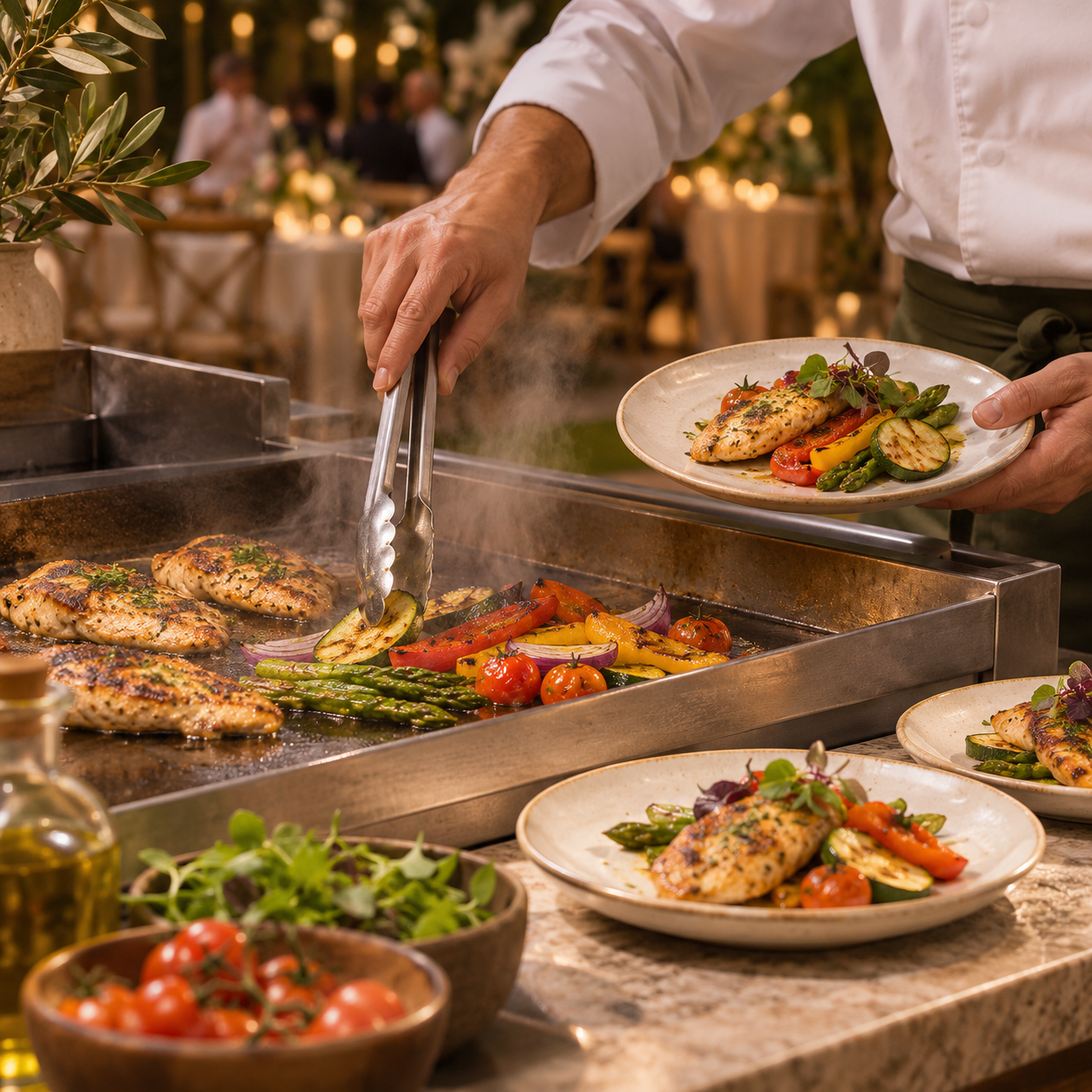
Once you have a sense of your level, the inquiry is where the match is made. Tell the chef your experience in concrete terms — what you cook, how often, and what you want to learn — and ask which class format they would recommend for that profile. A chef who asks follow-up questions is doing the matching work; one who books you into the next available class without asking is filling a seat. The inquiry is a conversation, and the quality of the chef's questions tells you a great deal about the quality of the class.
Ask what the class assumes you already know. A class labeled 'intermediate' may assume you can dice an onion cleanly and hold a pan at the right heat; if you cannot do those things fluently, the class will run ahead of you. A class labeled 'beginner' may still assume you have cooked a meal from scratch before; if you have not, say so. The assumptions are the gap between the class's pace and your hands, and naming them during the inquiry is what prevents a mismatch on the night.
Ask about the menu and what it teaches. A good class menu is built around techniques, not just dishes — a pasta class teaches dough and rolling, a sauce class teaches emulsification and reduction, a braising class teaches time and temperature. Ask which techniques the menu covers and whether those are techniques you want. A class that teaches a technique you will actually use at home is worth more than one that produces a beautiful dish you will never cook again, and the chef can adjust the menu to your goals if you share them.
Private classes and group classes for different levels
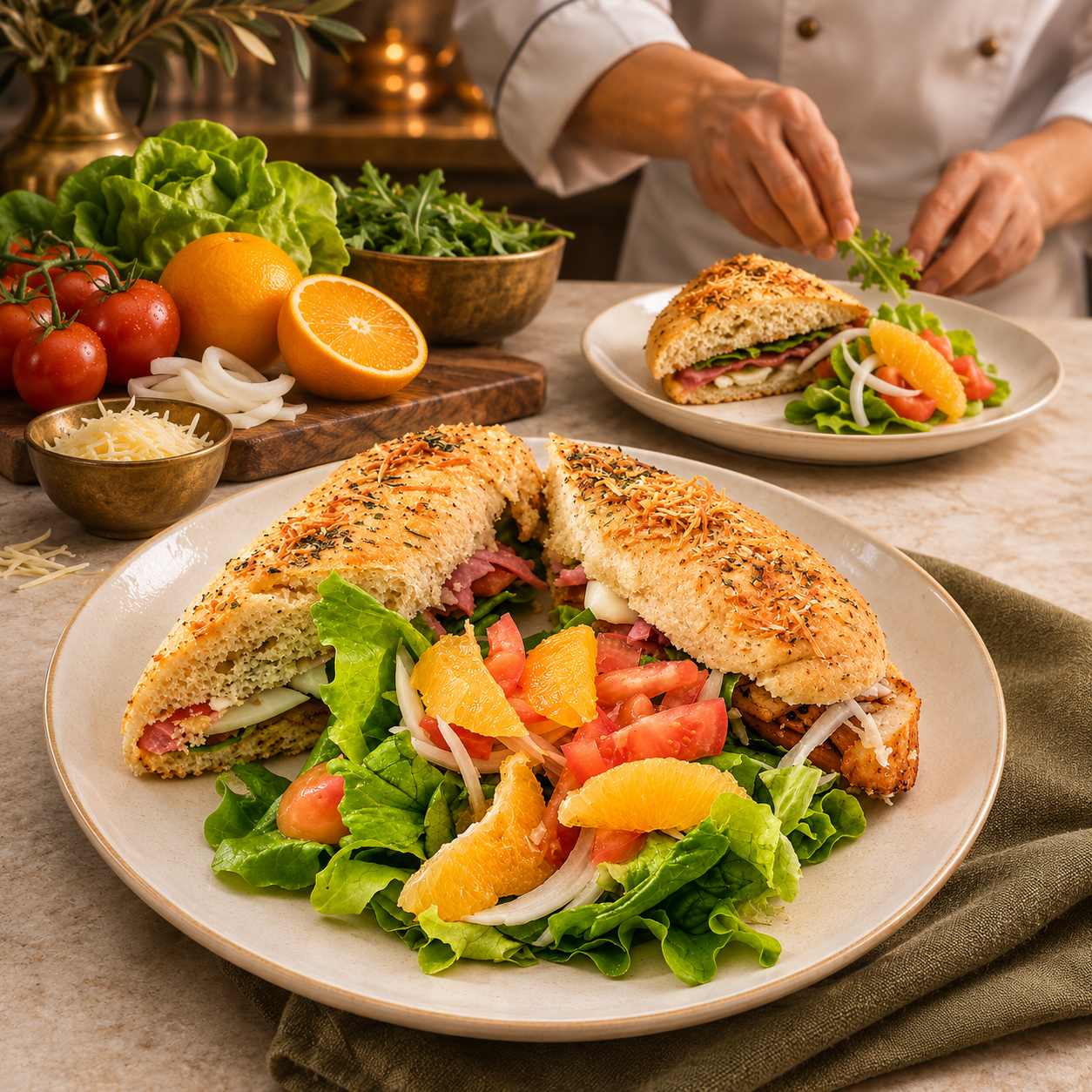
The format of the class interacts with skill level more than hosts expect. A private class — your table only — can be matched precisely to your level because the chef designs the menu and the pace for the people in the room. If your table mixes levels, the chef can tier the tasks: the experienced cook takes the demanding technique, the beginner takes the accessible one, and everyone eats the same menu at the end. A private class is the most flexible format for a mixed-level table, and it is the one that adapts most cleanly to where you actually are.
A group class — you join a session with other participants — is matched to a stated level, and the chef teaches to that level's average. If you are at the bottom of that range, the class may run ahead of you; if you are at the top, it may run behind. Group classes are excellent for the cook who sits squarely in the middle of a level, and they are often the more affordable option, but they are less forgiving of a mismatch. Ask the chef where the typical participant sits in the stated level before you book a group session.
The decision between private and group is also a decision about how you learn. Some cooks learn best with the chef's full attention on their hands; others learn best by watching other participants work and comparing. Neither is wrong, but the format should match your learning style as well as your skill level. Share how you learn best during the inquiry, and the chef can recommend the format that fits both your level and your style. Ambrosía's classes run twice a week, and private sessions can be arranged for your group or celebration.
After the class: building on the right level
The week after a class is where the level match is proven. If the class was matched well, you cook one of its dishes again within seven days and the technique holds — your hands remember the correction, the recipe reads differently, and the result is better than before the class. If the class was mismatched, you either cannot reproduce the dish because the technique was beyond you, or you find the dish too simple because the technique was beneath you. The first solo run is the honest test of whether the level was right, and it is normal for it to be slower than the class.
Keep a cooking notebook and write what the chef said about your specific habits, not just the recipe steps. 'Your heat was too high before the fond formed' is worth more than any ingredient list, because it is a correction aimed at your actual level. Over a few classes, that notebook becomes a record of your development, and it tells you which level to book next. A cook who has outgrown beginner classes will feel it in the notebook; one who needs another beginner session will feel that too.
When you are ready for the next class, book the level the notebook points to, not the level you assume you should be at. Returning students can request themes built on what they have already learned, and a chef who has taught you once can calibrate the next session precisely. Ambrosía's classes run twice a week, and dates, format and location are confirmed with you at booking. Share your experience and your goals through the inquiry page or call (469) 268-9100, and the chef will recommend the class that fits where you are and where you want to go.
Frequently asked questions
How do I know which skill level to book?+
Describe your experience in concrete terms during the inquiry — what you cook, how often, and what you want to learn. The chef recommends a level from that picture. Booking the level you actually are at, not the one you would like to be at, is what makes the class rewarding.
What if my group has mixed skill levels?+
A private class is the most flexible format for a mixed-level table. The chef can tier the tasks so the experienced cook takes the demanding technique and the beginner takes the accessible one, and everyone eats the same menu at the end.
What does a beginner class assume I already know?+
A beginner class assumes you are comfortable in the kitchen but have never built technique from the ground up. If you have never cooked a meal from scratch, say so during the inquiry so the chef can adjust the format.
Can an experienced cook still benefit from a class?+
Yes — an advanced class targets territory you cannot reach alone, like a multicourse tasting menu or a demanding technique. The class refines execution rather than teaching basics, and it often changes how you cook at home permanently.
Should I choose a private or group class?+
It depends on how you learn. A private class matches your level precisely and adapts to a mixed table; a group class teaches to a stated level's average and is excellent if you sit squarely in the middle of that level. Share your learning style during the inquiry.
How often are classes offered?+
Cooking classes are offered twice a week. Actual dates, format and location are confirmed with you at the time of booking.
How do I book the right class?+
Share your experience and goals through the inquiry page or call (469) 268-9100. The chef recommends the class that fits your level and confirms dates, format and location with you individually.
Source notes
- ✦Skill-level guidance reflects standard culinary teaching practice; the chef matches the class to the table during the inquiry.
- ✦Class-format comparison reflects general cooking-class practice; specific staffing and format always depend on the session.
- ✦Ambrosía offers cooking classes twice a week; dates, format and location are confirmed at booking.