
A first cooking class is a specific kind of experience, and the mistakes that shape it are specific too. Most first-class mistakes are not about cooking at all — they are about posture, expectation, and how you relate to the chef and the room. A beginner who arrives trying to prove they already know things learns less than one who arrives ready to be a beginner. This guide names the common first-class mistakes and explains how to get more from the lesson, so your first class is the one that makes you want to book a second. It is written for cooks across Texas and Florida taking their first chef-led class.
Ambrosía offers cooking classes twice a week; actual dates, format and location are confirmed with you at the time of booking. The mistakes below are the ones that cost a first-class cook the most, and the corrections are simple.
Performing expertise you do not have
The most common first-class mistake is performing expertise. A beginner who has cooked at home for years arrives with a reputation to protect, and when the chef corrects a grip or a heat, the beginner explains why they did it that way. The explanation is a defense, and the defense is the thing that blocks the lesson. A chef cannot teach a cook who is busy justifying their current method, and the first class is the one where this habit does the most damage because the fundamentals are being laid.
The correction is simple and uncomfortable: arrive as a beginner. Whatever you know from home cooking is real, but a class teaches technique that home cooking rarely builds, and the posture that receives it is humility. When the chef adjusts your hand, let them. When they say your heat is too high, turn it down and ask why. A cook who drops the performance learns the technique; one who keeps it up leaves with their reputation intact and their skill unchanged. The first class is the one where this choice matters most.
This is not about false modesty. If you genuinely know something — you can dice an onion cleanly, you have made a pan sauce before — say so during the inquiry so the chef can calibrate. But in the class, when a correction comes, receive it. The chef has seen your specific mistake in a hundred beginners before you, and the correction is the shortest path to the technique. A first class is a permission to be a student; take it.
Watching instead of doing
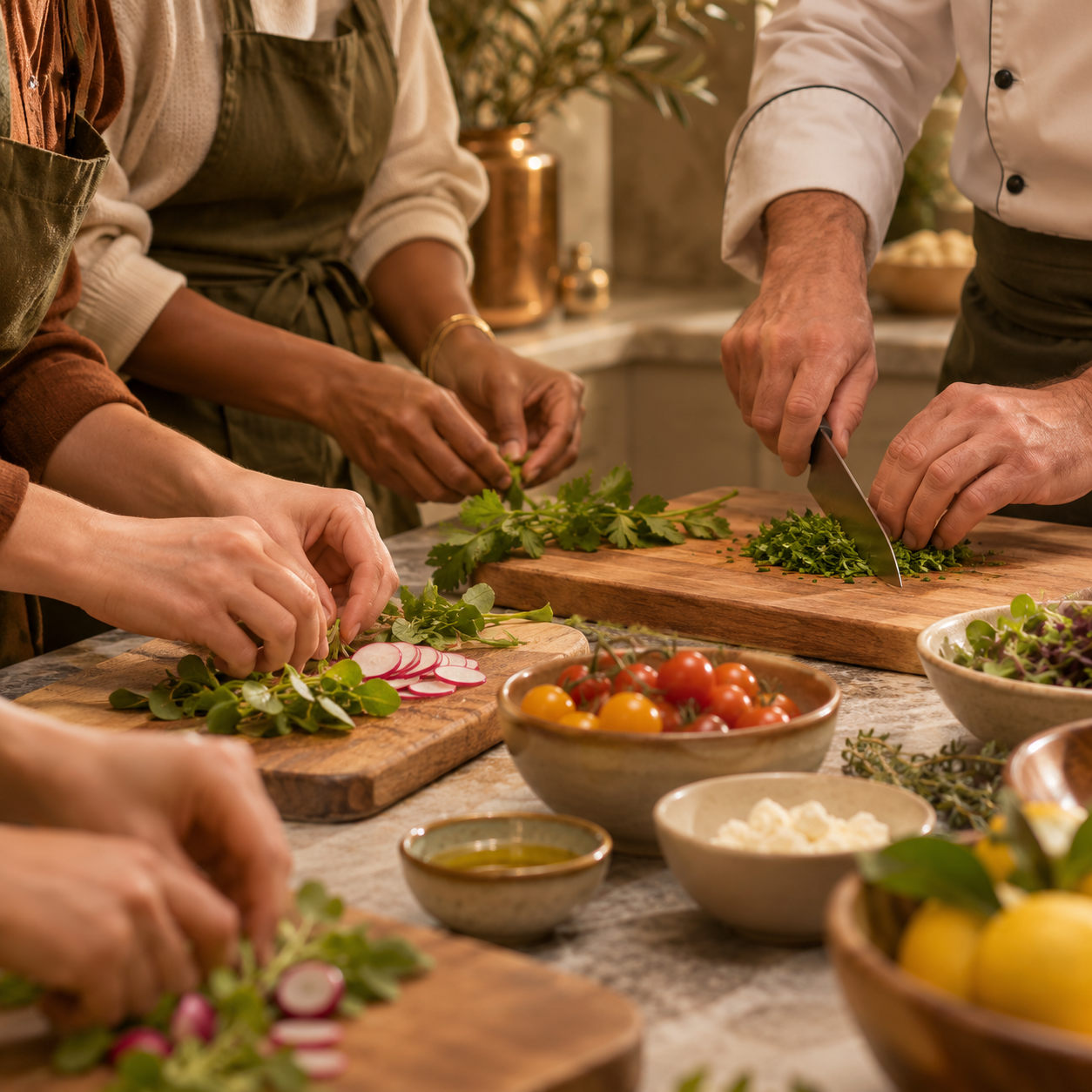
The second common mistake is watching instead of doing. A first-class cook, unsure of their hands, hangs back and watches the chef demonstrate, then watches the other participants, and only touches the ingredients when prompted. The class is hands-on for a reason: the technique lives in the hands, not the eyes, and a cook who watches the whole class learns what the technique looks like but not what it feels like. The gap between seeing and doing is the entire advantage of a live class over a video, and a beginner who does not cross it wastes the format.
The correction is to cook, even when you are unsure. A hands-on class is built for mistakes — the chef is there to catch them, and a mistake made and corrected in the class is a lesson kept. A sauce that breaks in your hands, rescued by the chef, teaches you the sign to watch for; a sauce that breaks in a video teaches you nothing. Reach for the pan, make the cut, attempt the technique. The chef would rather rescue ten of your attempts than watch you do nothing, because the attempts are where the learning lives.
If you are genuinely lost, ask for a demonstration of the specific step, then do it immediately after. Watch once, then do. A cook who watches, does, and asks is using the class well; one who only watches is in a demonstration wearing a hands-on label. The first class is where this habit forms, and forming it right means you leave with the technique in your hands rather than only in your memory.
Not asking questions
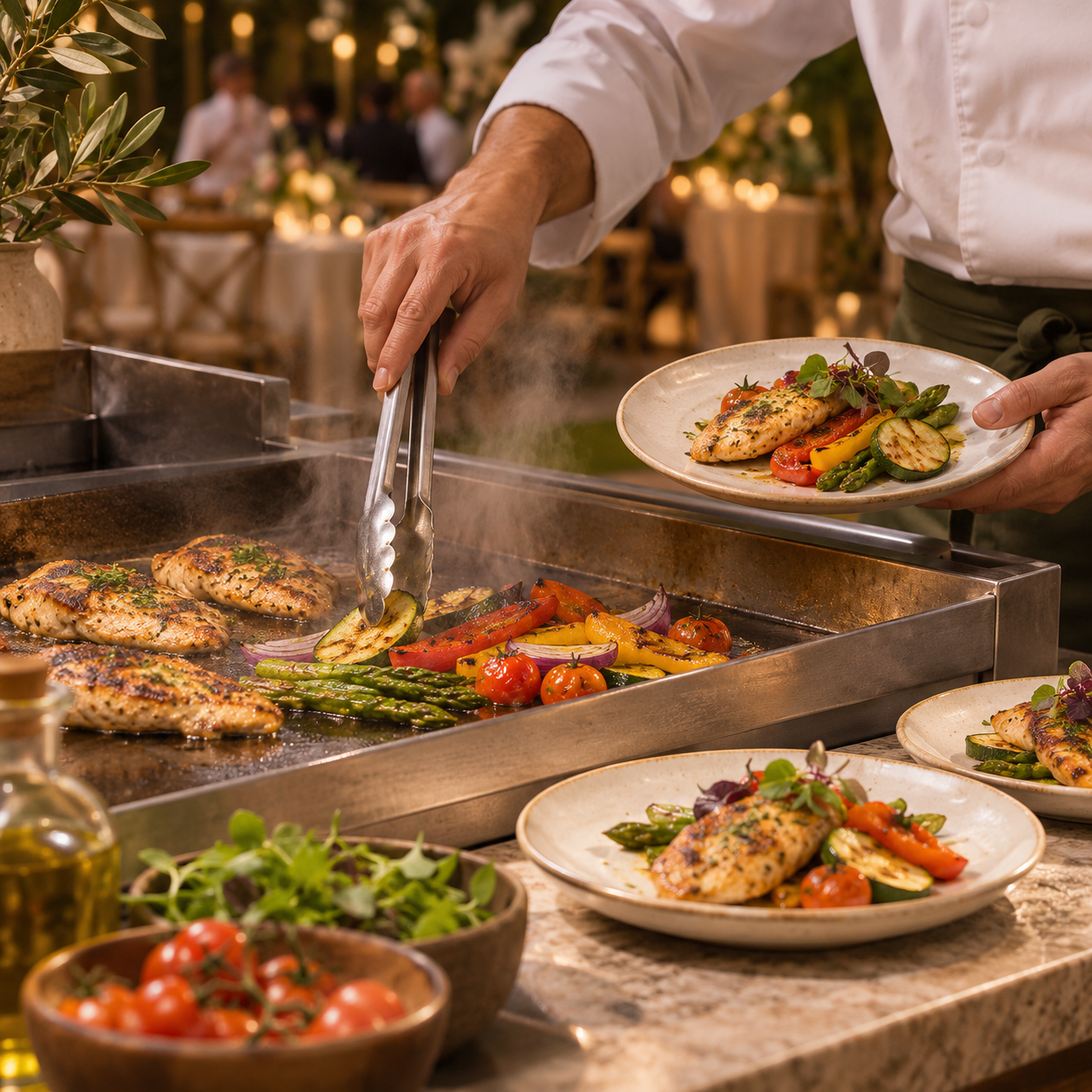
The third mistake is silence. A first-class cook, nervous and trying to look capable, does not ask questions, and the questions are the class. A video cannot answer why your sauce broke when you followed the steps; a chef can, and the answer is usually a principle that applies to every sauce you will ever make. A beginner who stays silent leaves with a recipe and a vague sense of the technique; one who asks leaves with the principle and the ability to cook without the recipe. The difference is enormous, and it is entirely in the asking.
Bring two or three questions to the class — the things you most want to fix at home. Tell the chef at the start. A good teacher bends the session toward the room's real questions, and yours are the most valuable material in the room. Ask mid-task, when the lesson is happening, because that is when the answer sticks. Ask why the chef did something, not just what they did, because the why is the principle and the what is the step. A cook who asks why can cook without the recipe; one who asks only what needs the recipe forever.
There is no dumb question in a first class. The chef has heard every beginner question, and the ones that feel embarrassing are usually the ones whose answers change the most. A cook who asks 'why does the oil need to be hot before the onions go in' learns a principle about heat and flavor; one who stays silent learns nothing and burns the onions. The first class is the one where asking matters most, because the fundamentals are being laid and the questions are what make them stick.
Rushing and not tasting
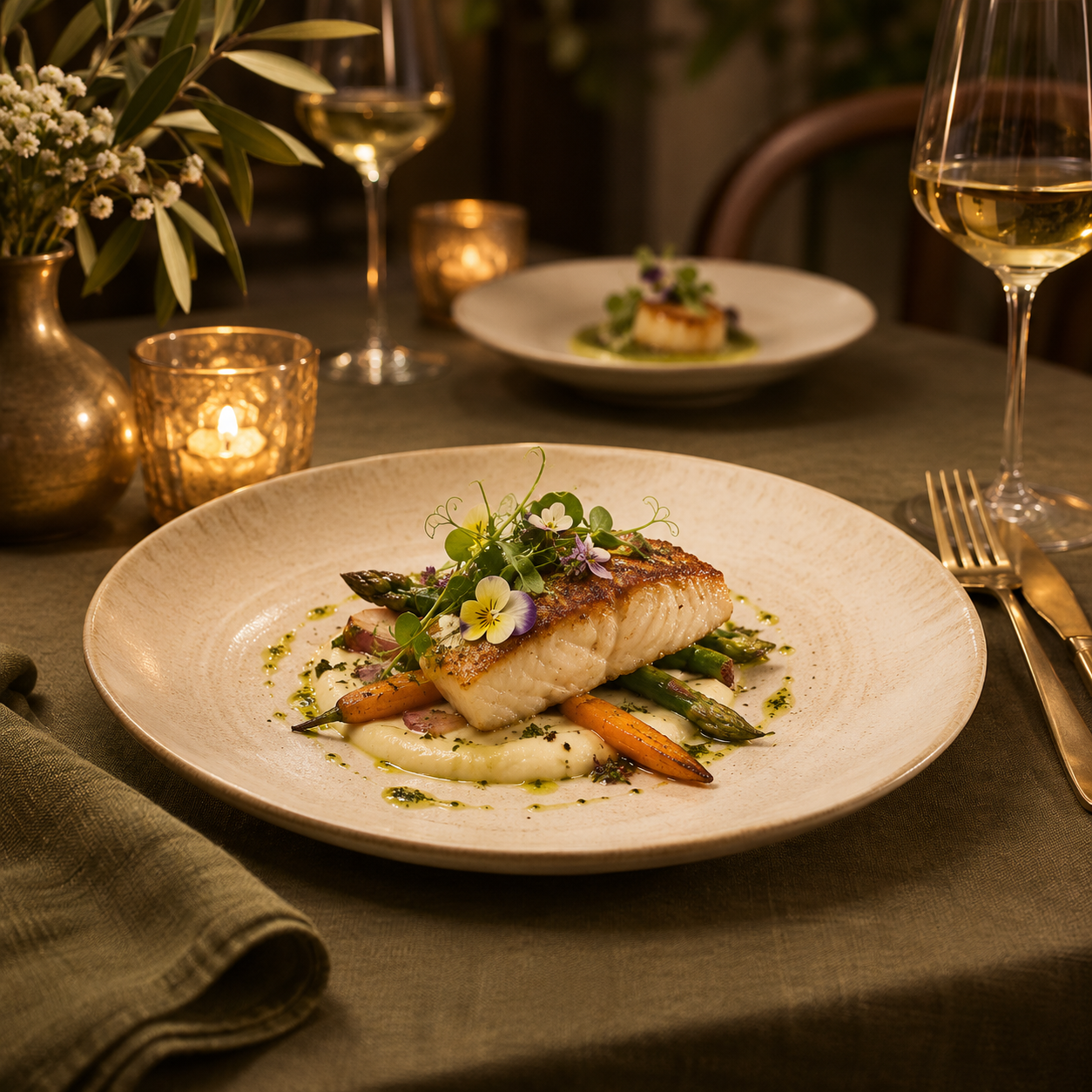
The fourth mistake is rushing. A first-class cook, eager to keep up, fires through the steps without tasting, and tasting is how a cook learns to season. A dish that is under-seasoned at the end is usually a dish that was never tasted along the way, and a beginner who does not taste cannot learn to correct seasoning because they never experience the difference. The chef tastes constantly — at every stage, from the raw ingredient to the finished plate — and the class is where you build that habit.
Taste at every stage the chef tastes. Taste the raw ingredient, taste the base, taste the sauce before and after the seasoning adjustment. The palate is a muscle, and a first class is where you start to train it, but only if you use it. A cook who tastes learns to recognize when a sauce needs salt or acid; one who does not taste learns to follow a recipe's seasoning amount and is lost when the recipe is gone. The tasting is the class's hidden curriculum, and it is the one that pays off longest at home.
Rushing also produces sloppy technique. A cut made quickly is a cut made badly, and a beginner who rushes their knife work to keep up with the room learns bad habits that take longer to unlearn than to learn. Slow down, do the technique correctly, and let the pace be the chef's problem, not yours. A hands-on class is not a race; it is a lesson, and the cook who works at the pace of correctness learns more than the one who works at the pace of the clock.
How to get more from the lesson
Getting more from a first class is a matter of a few deliberate habits. Arrive as a beginner and drop the performance — the class teaches technique that home cooking rarely builds, and the posture that receives it is humility. Cook instead of watch — the technique lives in the hands, and a mistake made and corrected in the class is a lesson kept. Ask questions, especially why, because the why is the principle that lets you cook without the recipe. Taste at every stage, because the palate is a muscle and the class is where you start to train it.
Keep a cooking notebook and write what the chef said about your specific habits, not just the recipe steps. 'Your heat was too high before the fond formed' is worth more than any ingredient list, because it is a correction aimed at your actual cooking. Within seven days, cook one of the dishes again at home, while the corrections are still fresh in your hands. Accept that your first solo run will be slower than the class — that is the difference between guided practice and independent practice, and it is normal.
When a technique finally lands — the first sauce that emulsifies because you understood it, not because you got lucky — book the next class with a harder menu. Ambrosía's classes run twice a week, and returning students can request themes built on what they have already learned. Your submission is an inquiry; dates, format and location are confirmed with you individually at booking. Share your experience and your goals through the inquiry page or call (469) 268-9100, and the chef will recommend the class that takes you from your first lesson to your next.
Frequently asked questions
What is the most common first-class mistake?+
Performing expertise you do not have. A beginner who defends their current method when the chef corrects it blocks the lesson. Arrive as a beginner, receive corrections, and the technique lands.
Should I watch the chef or cook myself?+
Cook. A hands-on class is built for mistakes, and the technique lives in the hands, not the eyes. Watch a demonstration once, then do it immediately after. A cook who only watches is in a demonstration wearing a hands-on label.
Is it okay to ask basic questions?+
Yes — there are no dumb questions in a first class. The chef has heard every beginner question, and the ones that feel embarrassing usually have the answers that change the most. Ask why, not just what.
Why does the chef taste so much during the class?+
Tasting is how a cook learns to season. Taste at every stage the chef tastes, because the palate is a muscle and the class is where you start to train it. A cook who tastes learns to correct seasoning; one who does not is lost without a recipe.
What if I am slower than the rest of the room?+
Slow down and do the technique correctly. A hands-on class is not a race; let the pace be the chef's problem. A cut made quickly is a cut made badly, and bad habits take longer to unlearn than to learn.
How often are classes offered?+
Cooking classes are offered twice a week. Actual dates, format and location are confirmed with you at the time of booking.
How do I get more from my first class?+
Arrive as a beginner, cook instead of watch, ask why, taste at every stage, keep a notebook, and cook one of the dishes again within seven days. Share your goals through the inquiry page or call (469) 268-9100.
Source notes
- ✦First-class guidance reflects standard culinary teaching practice; the chef corrects habits specific to each beginner.
- ✦Tasting and seasoning guidance reflects general culinary practice; the palate is trained through repetition.
- ✦Ambrosía offers cooking classes twice a week; dates, format and location are confirmed at booking.