
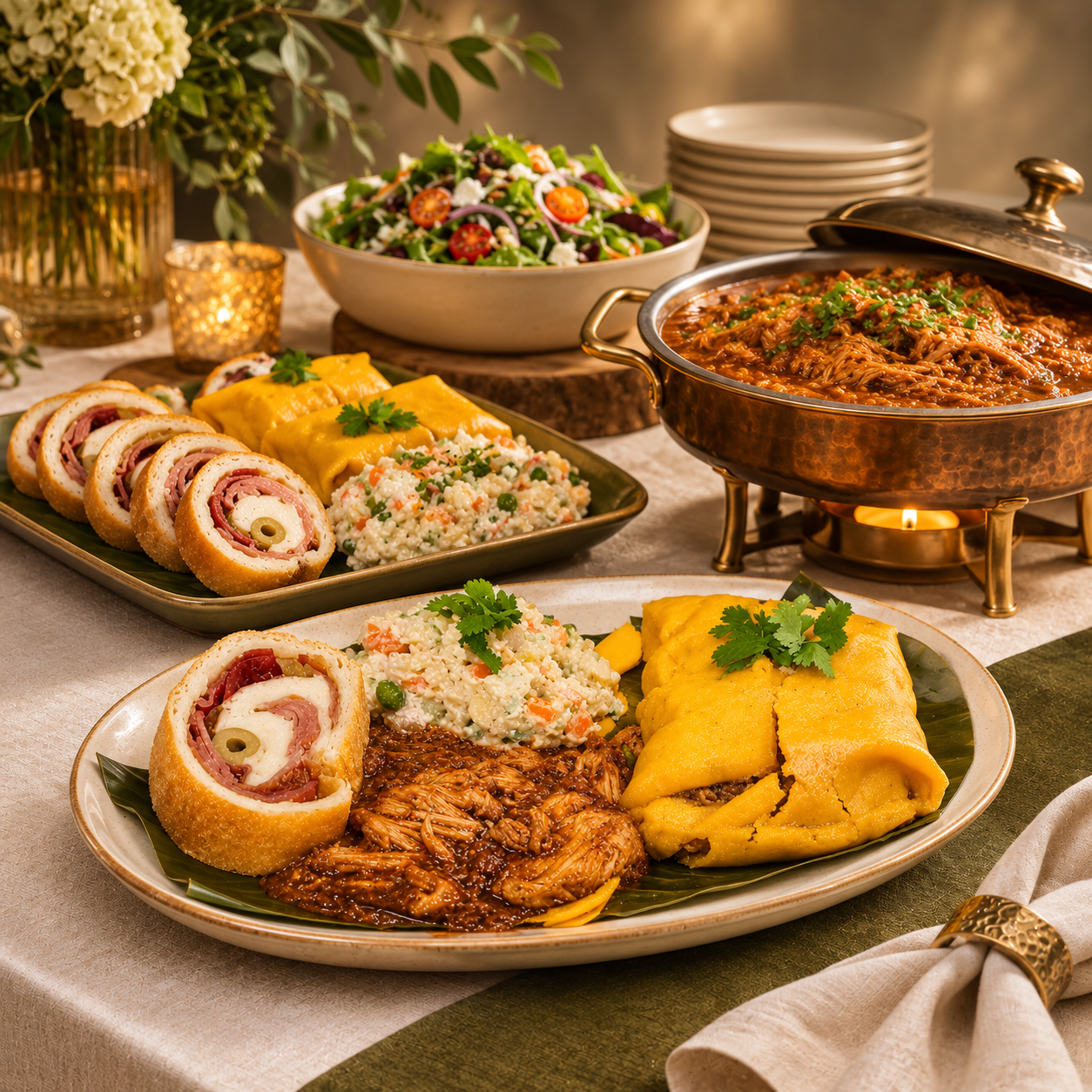
A custom catering proposal is the document that turns a date and a guest count into a plan a kitchen can actually execute. It is not a price list pulled from a binder; it is a menu written for your occasion, a service plan shaped to your venue, and a quote that itemizes what you are actually buying. Understanding how that proposal comes together helps you read one critically, compare caterers on substance, and arrive at the day with fewer surprises. This guide walks through the proposal from the first conversation to the signed agreement, written for hosts planning events across Texas and Florida.
What follows reflects how a chef-led caterer like Ambrosía builds a proposal: every menu written from scratch, every detail confirmed with you before anything is booked, and availability confirmed individually for each date and venue. The proposal is the artifact of that conversation, not a substitute for it.
The inquiry: the conversation that starts the proposal
Every proposal begins with an inquiry, and the quality of that first exchange shapes everything after it. A useful inquiry names the occasion, the date (or a range), the approximate guest count, the venue or the type of venue, and anything the table cannot or will not eat. From those facts, the caterer begins to picture the event: a wedding of one hundred and twenty in a hotel ballroom asks for a different menu and service plan than a fortieth-anniversary dinner of thirty in a private home.
Expect the caterer to ask back. How formal is the evening? Is there a fixed time for toasts or speeches that the kitchen must work around? Are there guests with allergies that need separation, or preferences that can simply be folded into the menu? Does the venue have a kitchen, or will the team cook on portable equipment? A caterer who quotes before asking these questions is selling a package; one who asks is building a proposal, and the difference shows up on the night.
The inquiry is also where availability is confirmed. A date that looks open on a calendar may already be held for another event once travel, staffing and logistics are considered. At Ambrosía, your submission is an inquiry, and availability is confirmed individually for each date and venue before any menu is written.
Shaping the menu: from preferences to a written plan
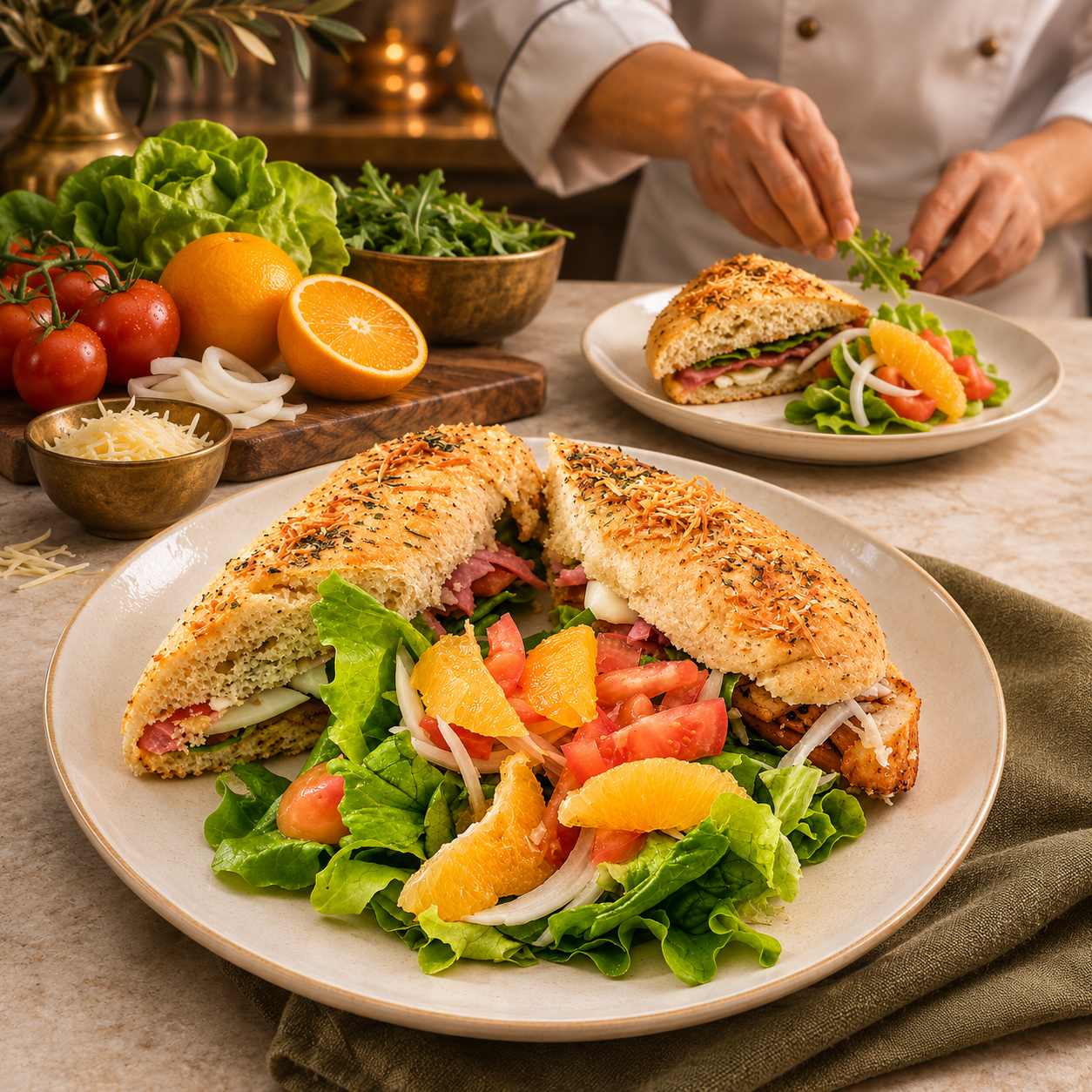
Once the inquiry establishes the frame, the menu is where a from-scratch kitchen earns its difference. Rather than presenting three fixed packages labeled gold, silver and platinum, the chef proposes a menu built around your occasion — a first course that references the season, an entrée that accounts for the dietary requests on your guest list, a dessert that fits the tone of the evening. Each dish is described plainly, with the ingredients and the technique named, so you can judge the proposal on what it actually is rather than on a label.
Dietary requests are designed into the menu, not bolted on afterward. If several guests are vegetarian, the chef may propose a main that is naturally plant-forward so those guests receive a complete course rather than a substitute plate. If a guest has a celiac-level gluten restriction, the proposal should name the separation protocol — dedicated prep space, separate utensils — not simply promise 'gluten-free.' The quality of how dietary needs appear in the proposal tells you a great deal about how the whole event will run.
Expect the menu section to also address the practical layer: which dishes are finished on site, which are brought ready, and how the kitchen will execute the courses in your specific venue. A menu that ignores the venue's kitchen is a menu that may not survive the night; a menu that is designed around it is one that will.
Service plan, staffing and logistics
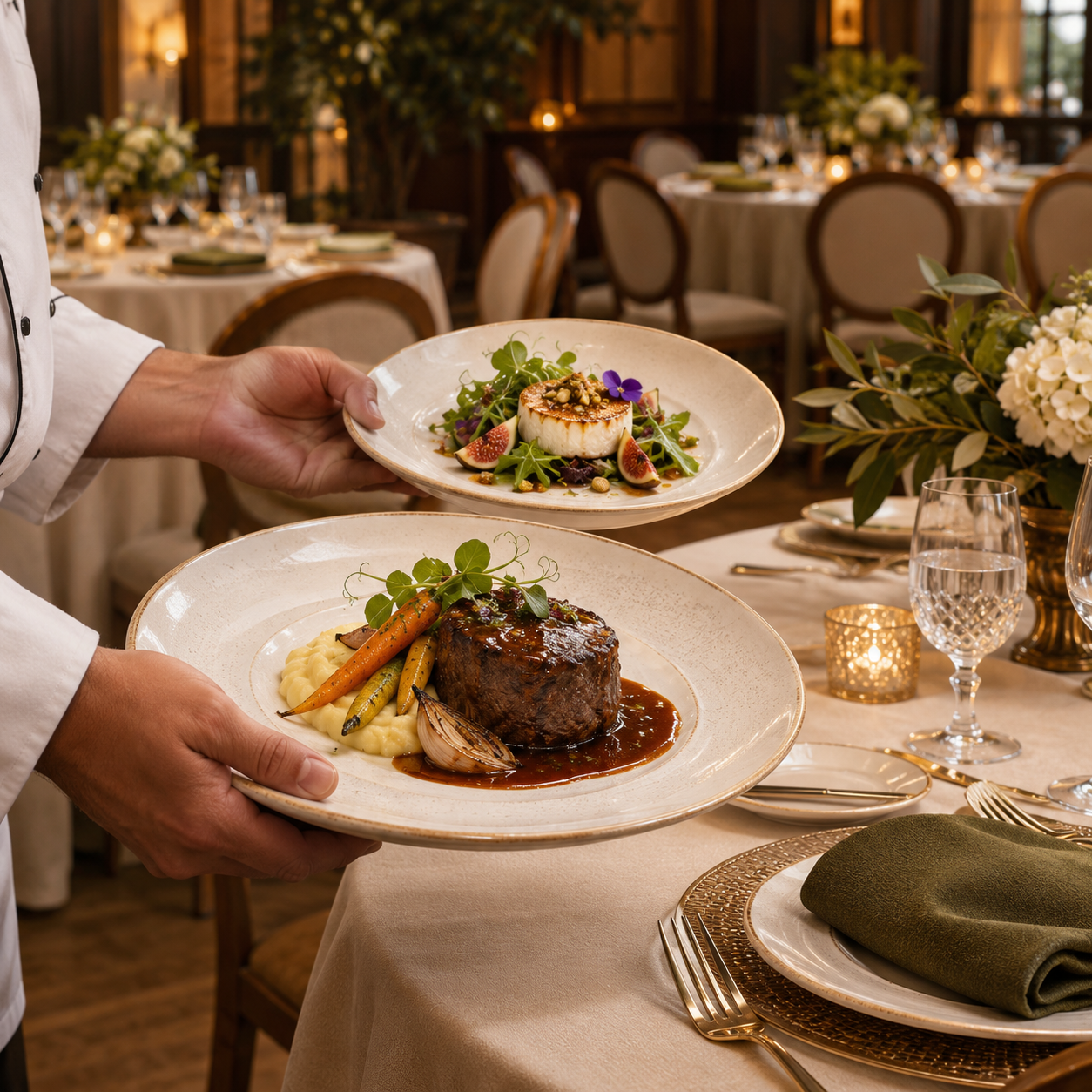
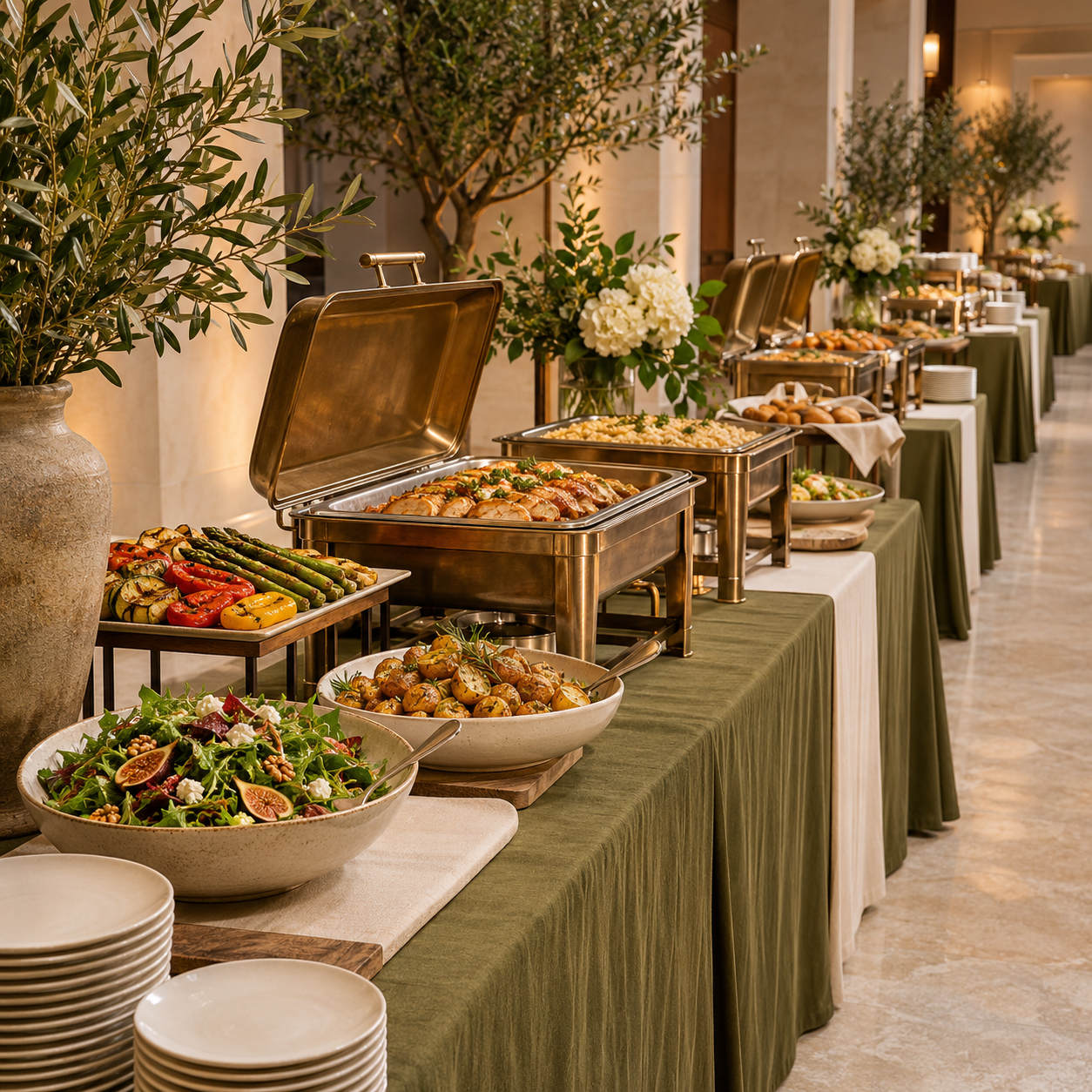
The proposal's service plan is the part most hosts underread, and the part that most often determines whether the evening runs. It should name the service style — plated, buffet, family style, or a combination — and explain how that style will run in your specific room. It should state the staffing: how many servers, how many kitchen, who runs the floor, and what happens if the count shifts. A proposal that lists 'service included' without these specifics is a proposal that leaves the staffing to chance.
Logistics deserve the same transparency. How does the team load in, and how much time does the kitchen need before service? What equipment does the caterer bring, and what does the venue provide? Are rentals — tables, linens, glassware — included, coordinated, or the host's responsibility? Each of these is a line item in a well-built proposal, and each one you can read is one you will not be surprised by on the day.
Timing is the thread that ties it together. The proposal should include a working timeline: load-in, kitchen start, first course fired, courses served, bar close, load-out. That timeline is built around your other vendors — the photographer's golden hour, the band's set change, the venue's curfew — and a proposal that ignores them is one that will collide with them. Ask to see the timeline before you sign, and confirm it is built around your event, not a template.
The quote: reading what you are actually paying for
The quote is where a custom proposal separates itself from a package. Rather than a single number, a well-built quote itemizes the components: food cost, service and staffing, rentals if applicable, travel, and any per-guest or per-event fees. Itemization lets you compare caterers on actual scope — two proposals at the same total may include very different things — and lets you adjust the event by moving a line item rather than renegotiating a mystery number.
Watch for what the quote does and does not include. Is gratuity for the service team stated separately or built in? Are beverages — alcohol, non-alcoholic, coffee — included or an add-on? Does the quote cover load-out and cleanup, or is that an extra? A proposal that is clear about these boundaries is one you can trust; one that is vague is one where the surprises live.
Pricing should be personalized, not pulled from a chart. At Ambrosía, quotes are built from your menu, your count and your venue, and confirmed with you before booking. There is no published price list, because there is no standard event — and a caterer who quotes a fixed per-head number without knowing your menu is quoting a package, not your event.
From proposal to booking: what gets confirmed
A proposal is a draft until you confirm it, and the confirmation stage is where the remaining unknowns are closed. The guest count is firmed (with a final count deadline named), the menu is locked course by course, the dietary list is finalized and mapped to seats or tables, and the timeline is agreed with your other vendors. Anything still open — a venue access time, a rental item, a beverage decision — is named and assigned a deadline, not left to resolve itself.
The agreement should put the confirmed details in writing: the date, the venue, the menu, the service plan, the staffing, the quote, and the cancellation and payment terms. A caterer who will not put these in writing is a caterer who may change them; one who does is one whose proposal you can hold them to. Read the agreement against the proposal, and confirm that what you discussed is what you are signing.
Finally, expect a final check-in as the date approaches — a brief conversation to confirm the count, walk through any changes, and answer last questions. That conversation is the difference between a caterer who delivered a proposal and one who is delivering your event. At Ambrosía, the proposal is the beginning of that relationship, and every detail is confirmed with you individually before the day.
Frequently asked questions
What information do I need to request a catering proposal?+
The occasion, the date or date range, the approximate guest count, the venue or venue type, and any dietary needs or restrictions. The more specific you are, the more accurate the first proposal will be.
How long does it take to receive a proposal?+
Most custom proposals are returned within a few days of the inquiry, once the menu and logistics are drafted. Complex events or venues that need a walkthrough may take longer.
Is the proposal a fixed price?+
No. A custom proposal is built from your menu, count and venue, and the quote itemizes each component. Changes to the count or the menu adjust the quote by line item rather than as a mystery total.
Does the proposal include staffing and rentals?+
A well-built proposal states staffing and any rentals explicitly, or names them as the host's responsibility. If a proposal lists only 'service included' without specifics, ask for the detail before booking.
Can the menu change after I receive the proposal?+
Yes — the proposal is a draft until you confirm. Adjustments are normal during planning; major changes after booking may affect cost and logistics and should be discussed early.
Do you travel outside the Aubrey area for catered events?+
Yes. Ambrosía serves event venues across Texas and Florida; travel and availability are confirmed individually for each date and venue.
How is the final guest count confirmed?+
The proposal names a final-count deadline (often a week to ten days before the event). The count is firmed at that point and the kitchen and staffing are set to match it.
Source notes
- ✦Proposal structure reflects standard chef-led catering practice; specific terms always depend on the event and venue.
- ✦Dietary-handling guidance reflects general food-safety practice; venue and local rules always take precedence.
- ✦All Ambrosía proposals are written from scratch and confirmed with the host before booking.