
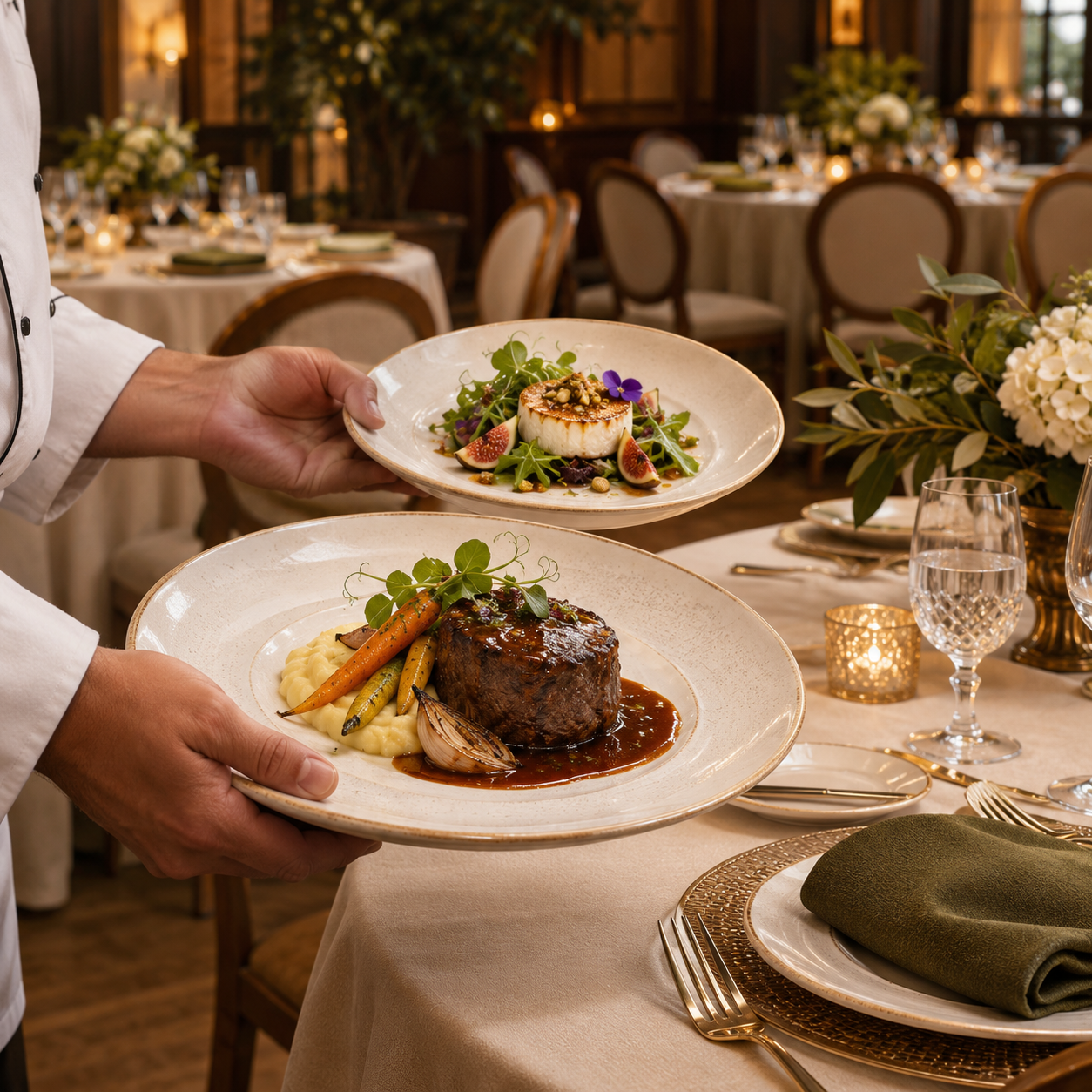
Banquet catering is the format most people picture when they imagine a celebration: long tables, a coordinated kitchen, and a service team that moves in rhythm from arrivals to the final course. But behind that picture is a chain of decisions — timing, staffing, layout, menu structure — that determines whether the evening feels effortless or fragmented. Understanding what banquet catering actually involves helps you plan it, and helps you judge proposals on substance rather than price alone.
This guide walks through the full arc of a banquet, from the first guest arrival to the last plate cleared. It is written for hosts planning weddings, milestone birthdays, corporate galas, quinceañeras and family reunions in North Texas and beyond, and it reflects how a chef-led service like Ambrosía approaches the format: every menu written from scratch, every detail confirmed with you before the day.
Before arrival: the planning that makes service possible
A banquet is won or lost before the first guest parks. Weeks earlier, the caterer needs a confirmed headcount, a floor plan, venue access times, and a menu agreed course by course. From these, the kitchen builds a production schedule: what can be prepared a day ahead, what must be finished on site, and in what order dishes leave the kitchen so that every table receives the same course at roughly the same moment.
The venue walkthrough matters more than most hosts expect. Load-in doors, elevator access, kitchen size, oven availability, and the distance between the kitchen and the farthest table all shape the service plan. A banquet served in a venue with a small prep kitchen needs a different menu than one with full commercial facilities — a chef will design around what the room can actually support rather than promising dishes the space cannot deliver.
Staffing is planned from the same numbers. As a working reference, formal plated service typically runs one server per ten to twelve guests, buffet service one per twenty to twenty-five, and every event needs a floor lead who owns the timeline. Confirming these ratios in writing prevents the most common banquet complaint: a beautiful menu delivered by an undermanned room.
Arrivals and the cocktail hour
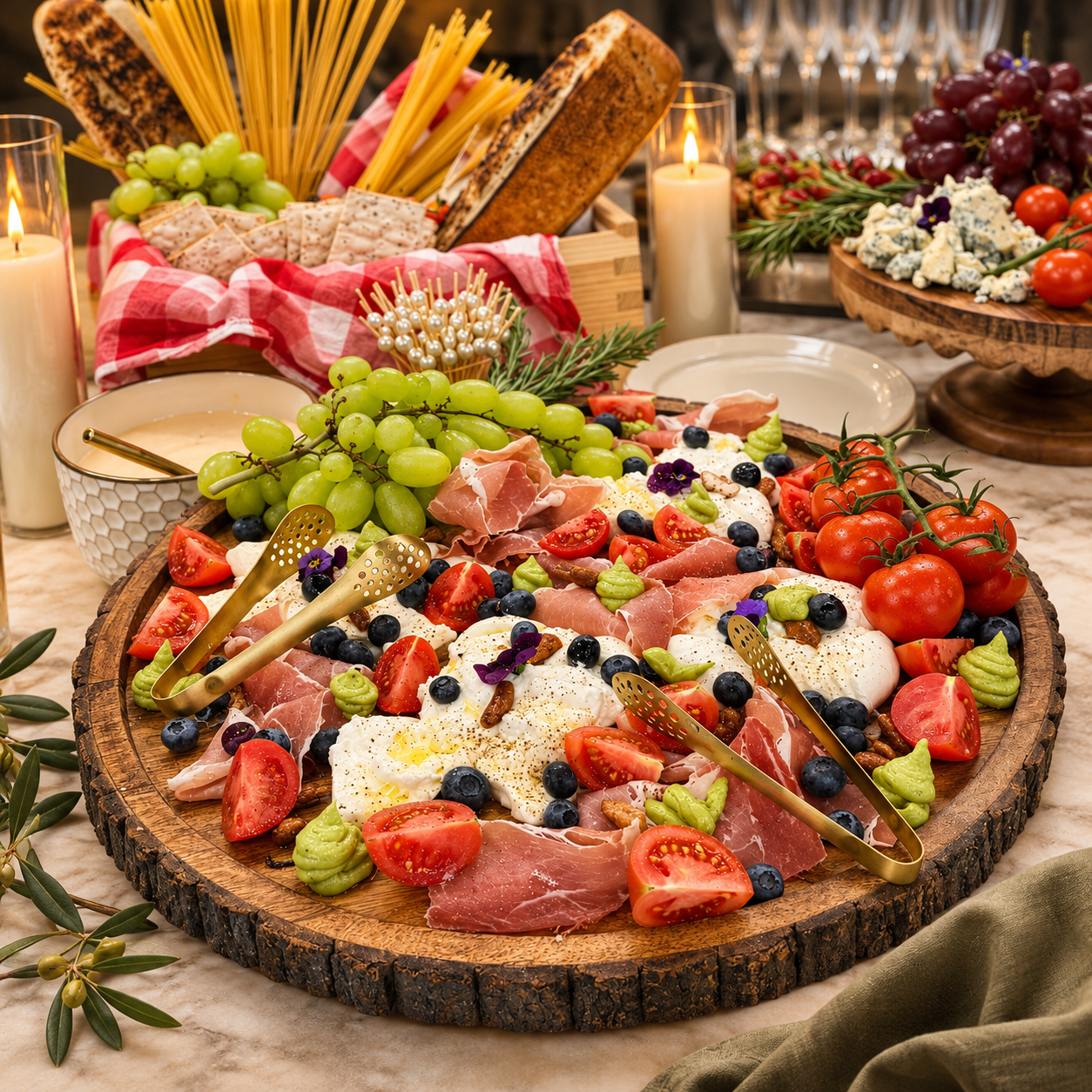
The first hour of a banquet rarely involves sitting down. Guests arrive in waves — some early, some late, some straight from traffic — and the catering team's job is to absorb that irregularity. Passed appetizers and a well-placed beverage station let the room fill at its own pace while the kitchen finishes the final preparations for dinner.
This is where the menu's architecture starts. Light, one-handed bites keep conversation easy and keep linens clean; heavier or saucy items are held for the seated courses. A good rule is three to five passed pieces per guest for a one-hour reception, adjusted upward if dinner will be served late. The beverage plan deserves equal attention: a signature drink, water visibly available everywhere, and a non-alcoholic option that is genuinely appealing rather than an afterthought.
Timing is coordinated with your other vendors. Photographers want the couple available during golden hour; DJs and bands want the room's attention for entrances. The catering timeline is built around those fixed points, which is why a banquet proposal should always ask for your full vendor list, not just the guest count.
Seated dinner: plated, buffet or family style
The seated portion of a banquet is where service style becomes a design decision. Plated service — each guest served individually at the table — is the most formal and the most controlled: portions are identical, dietary requests are handled discreetly, and the room moves together. It demands the largest team and the tightest kitchen timing, because every plate is finished and delivered in a window of minutes.
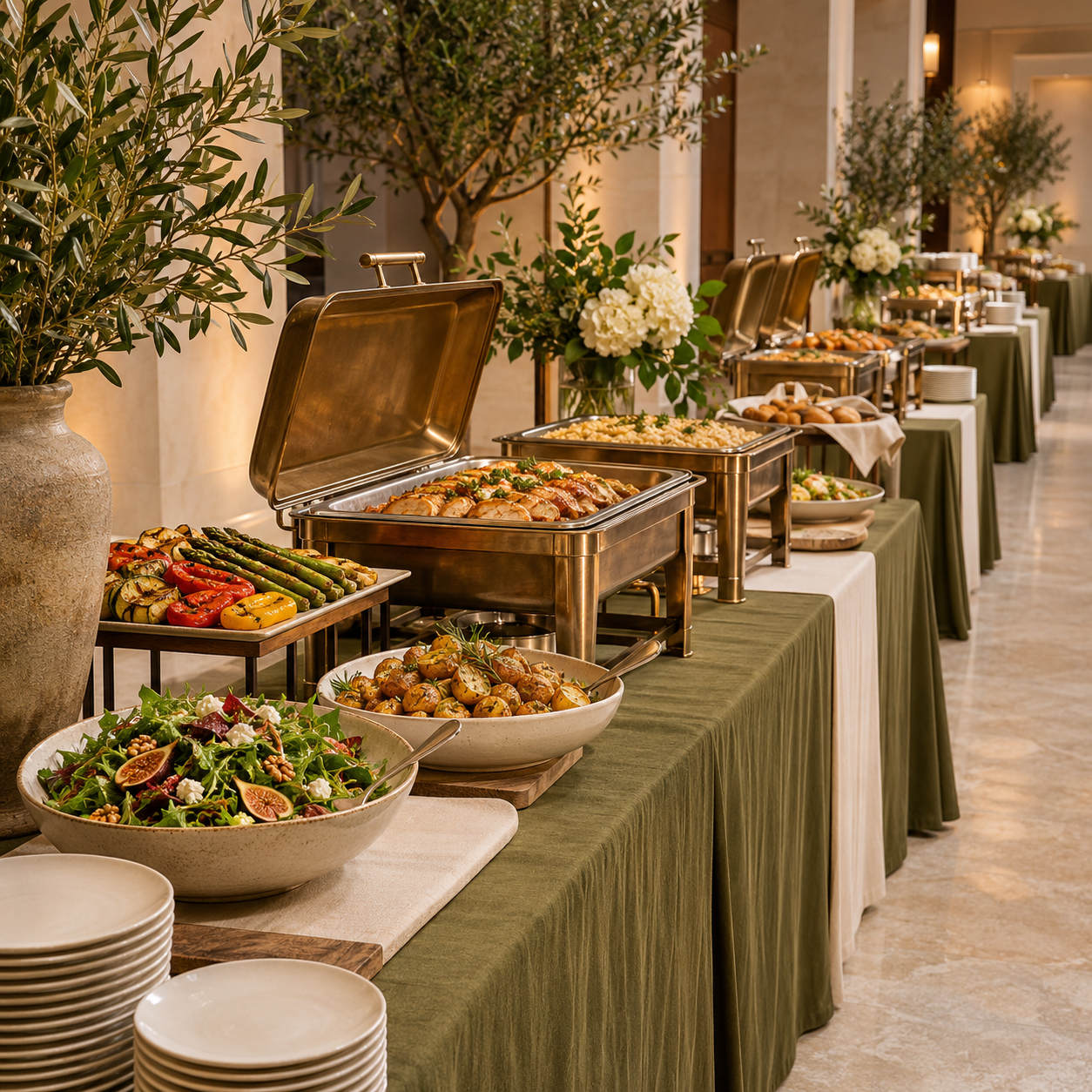
Buffet service trades some of that formality for flow and variety. Guests choose portions and combinations, the kitchen can offer a wider spread, and staffing drops noticeably. The trade-offs are lines (managed with double-sided stations and staggered table releases) and the visual effect of the room standing and moving mid-event. Family style splits the difference: platters are set on the tables and guests serve one another, which warms the atmosphere and keeps people seated, but requires generous quantities and table-space planning.
There is no universally correct answer. A wedding of two hundred often wants plated efficiency; a fiftieth-anniversary dinner of forty may want the intimacy of family style. What matters is that the choice is deliberate — matched to your guest list, your venue and the tone you want — and that the caterer explains exactly how each style will run in your specific room.
Dietary requests at banquet scale
Feeding one guest with an allergy is a conversation; feeding twelve across two hundred covers is a system. Well-run banquets collect dietary information at the same time as RSVPs, consolidate it into a single list, and map each requirement to a specific seat or table. On the day, plates for those guests are marked, fired separately or pulled from a dedicated batch, and delivered by a server who knows which seat receives them.
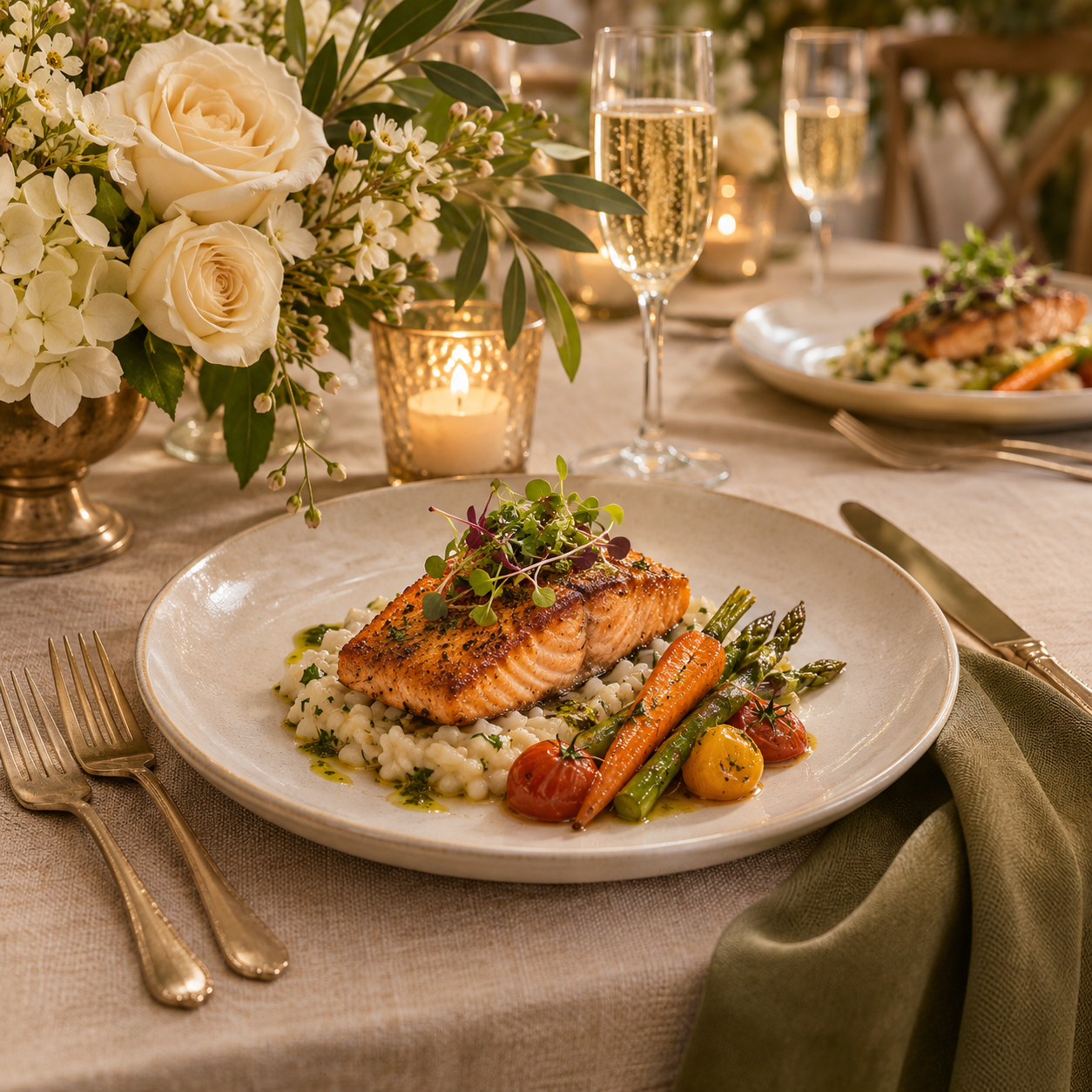
The chef's role here is translation. 'Vegetarian' can mean ovo-lacto, vegan, or simply no red meat; 'gluten-free' ranges from celiac-grade separation to a preference. A from-scratch kitchen can design a menu where several dishes are naturally inclusive — a risotto finished to order, a braised short rib alongside an equally celebratory vegetable plate — so that guests with restrictions receive a complete experience rather than a stripped-down substitute.
Ask any banquet caterer you are considering how dietary requests travel from your guest list to the plate. If the answer stops at 'we can handle it,' keep asking: which dishes, which separation protocol, who briefs the servers. The quality of that answer tells you a great deal about how the whole event will run.
The final course, toasts and load-out
The close of a banquet has its own choreography. Dessert is timed around toasts and speeches — served after the last one, or held ready so the room never sits with empty tables during them. Coffee and tea service extends the evening gently, giving guests a reason to stay and talk rather than a signal to leave. Cake cutting, if there is one, is coordinated with the kitchen so portions are plated and served while the moment is still warm.
Then comes the part guests never see: load-out. Leftovers are handled exactly as your agreement states — some hosts want them packaged for family, some venues forbid food leaving the premises, and health rules in some settings prohibit repacking served food entirely. The kitchen breaks down, the venue is returned to its required condition, and rentals are counted and staged for pickup. A banquet that ends calmly is usually one whose load-out was planned as carefully as its first course.
Finally, a short debrief within a day or two — what ran on time, what ran long, what the room taught the team — is what separates a caterer you can rebook from one you simply used once. At Ambrosía, that closing conversation is part of the service: your submission is an inquiry, and every detail, from arrival to load-out, is confirmed with you individually before the date.
Frequently asked questions
How far in advance should I book banquet catering?+
For peak-season Saturdays, three to six months is a comfortable margin; smaller weekday banquets can often be arranged with four to eight weeks. Availability is confirmed individually for each date, so share your date as early as you have it.
How is a banquet quote calculated?+
Quotes are shaped by guest count, menu structure, service style, staffing needs and venue logistics. A proposal should itemize these so you can compare offers by actual scope, not just total price.
Can you work in a venue without a full kitchen?+
Often yes, with a menu designed for the space — dishes that finish beautifully on portable equipment. The venue walkthrough determines what is realistic before anything is promised.
Do you provide rentals like tables and linens?+
Rental coordination can be included or handled alongside your event planner. What matters is that one party owns the floor plan so tables, kitchen flow and service paths agree.
How many servers will my banquet need?+
As a planning reference: roughly one server per ten to twelve guests for plated service, one per twenty to twenty-five for buffet, plus a floor lead. Your proposal will state the exact team for your room and style.
What happens to leftover food?+
It depends on your agreement and venue rules. Some events package unserved food for the host; some venues and food-safety rules restrict it. Decide before the day and put it in writing.
Do you travel outside the Dallas area?+
Yes. Ambrosía is based in Aubrey, Texas and accepts banquet inquiries across Texas and Florida. Travel and logistics are confirmed individually for each venue and date.
Source notes
- ✦Service staffing ratios reflect common North Texas banquet practice; your venue and menu may shift them.
- ✦Dietary-handling guidance reflects general food-safety practice; specific venue rules always take precedence.
- ✦All Ambrosía menus are written from scratch and confirmed with the host before the event.